TL;DR
Post-pandemic hotel operations are no longer defined mainly by emergency health protocols. The lasting change is a leaner, more technology-dependent operating model focused on labor productivity, cost control, resilience and faster service recovery, while guests still expect warmth and consistency.
Hotel operations changed rapidly during the pandemic, but the more important story in 2026 is what remained after the immediate crisis ended. Staffing structures, housekeeping choices, digital workflows, procurement, revenue management and guest communication have all been reworked under persistent cost pressure. Properties are trying to deliver a service level guests recognize while using labor and technology more selectively than many did before 2020.
Recovery has turned into operating redesign
The U.S. hotel sector has recovered demand unevenly, while profit pressure remains significant. AHLA's 2026 State of the Industry says rising operating expenses kept gross operating profit per available room at roughly 90% of 2019 levels in its U.S. outlook. That is an industry association forecast rather than a universal property benchmark, but it illustrates why operators are still redesigning workflows even after occupancy and guest spending improved.
The operating question is therefore not 'How do we return to the old model?' It is 'Which parts of the old model still create guest value, and which can be handled differently?' Daily housekeeping frequency, front-desk staffing, food-and-beverage hours, maintenance coverage and back-office roles may all be configured more dynamically. The risk is that efficiency changes become visible as service gaps instead of better resource allocation.
Labor models are becoming more flexible and specialized
Staffing remains one of the most difficult operating variables because service demand is time-sensitive and highly local. AHLA's March 2026 owner and operator survey highlighted ongoing pressure from labor, supplies, insurance and energy costs. For many hotels, that pushes managers toward cross-training, more precise scheduling, centralized support functions and technology that removes repetitive administrative work.
Flexibility does not automatically mean fewer people. In some areas, the right response is to redeploy people toward moments where judgment, empathy or service recovery matter most. A digital checkout can reduce a queue, but a complex billing dispute still needs an empowered employee. Automated task routing can save supervisor time, but only if the maintenance or housekeeping team receives accurate priorities.
The technology stack is moving from patches to integration
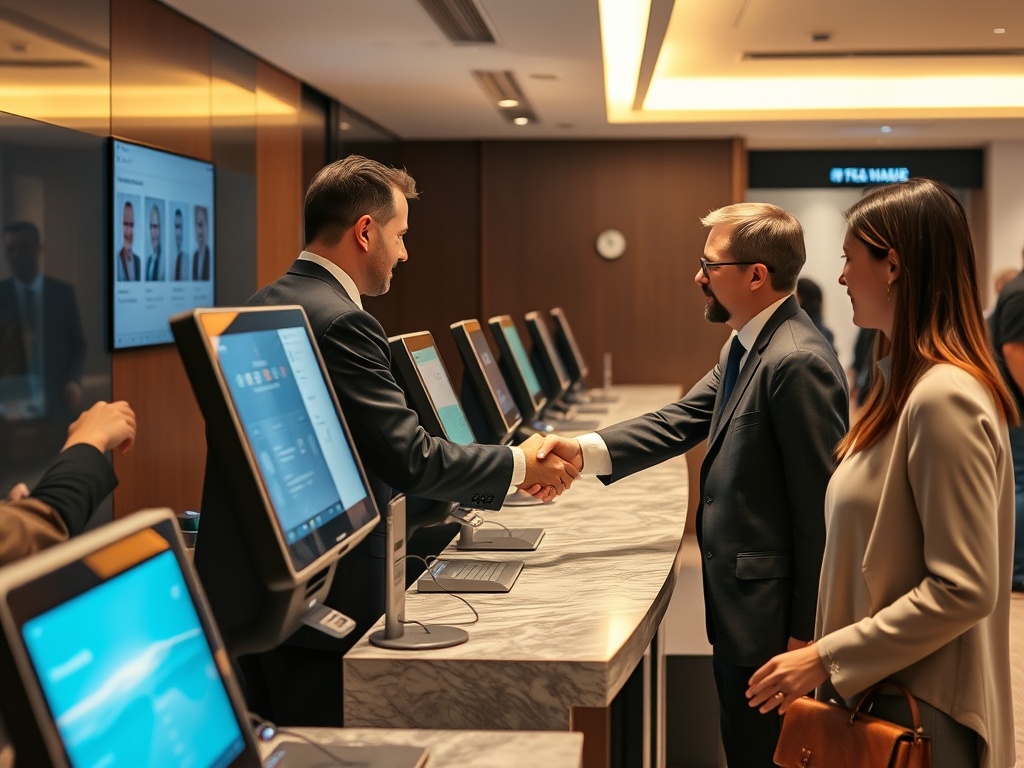
The pandemic accelerated adoption of mobile check-in, messaging, digital menus and cloud systems. The next phase is integration. A 2026 technology study led by NYU SPS Tisch Center students with Stayntouch and IDeaS found that hotel professionals continue to cite integration as a major pain point and linked technology architecture to booking errors, missed preferences and check-in delays. The 2026 Hotel Technology Outlook is vendor-supported research, so its percentages should be read in that context, but the operational lesson is straightforward: fragmented systems can create guest-facing friction.
Hotels are now more likely to ask whether the property management system, revenue tools, CRM, payment stack, housekeeping platform and guest messaging service share useful data reliably. New technology is less valuable when it adds another login or manual handoff. The goal is a cleaner operational flow: one change to a reservation should update the teams that need to act on it.
Cost control is becoming more granular
Broad cost-cutting can damage the guest experience quickly, so operators are using more granular measures. Energy controls, preventive maintenance, menu engineering, purchasing consolidation, linen management and schedule optimization can reduce waste without directly removing a guest benefit. Revenue teams are also working more closely with operations because a high room rate is not automatically attractive if the cost to serve that demand rises faster.
This makes profitability increasingly property-specific. A resort with extensive amenities has a different labor and utility profile from a limited-service urban hotel. Benchmarks matter, but managers need to understand contribution by room type, channel, package, day of week and ancillary service. The post-pandemic operating model is more analytical because cost volatility makes averages less dependable.
Guest expectations expose operational seams faster
Guests may not care which department owns a problem. They experience the handoff. A room-not-ready message, a mobile key failure, an unanswered chat or a billing error can make the organization feel fragmented. This is why the evolution of contactless service expectations is fundamentally an operations topic, not just a technology topic. Digital convenience creates value only when the physical operation can complete the promise.
The same principle applies to reputation. Review patterns can reveal where process design is breaking: inconsistent housekeeping, slow maintenance, confusing fees, weak breakfast replenishment or delayed service recovery. A useful operating review connects those comments to staffing, system data and standard operating procedures rather than treating reputation as a marketing-only problem.
Operational priorities for the next 12 to 24 months
| Priority | Management question | Guest-facing test |
|---|---|---|
| Workforce | Where does human judgment create the most value? | Are complex requests resolved quickly? |
| Systems | Which handoffs still require duplicate entry? | Do reservation changes propagate correctly? |
| Costs | Which savings preserve the core stay? | Is the guest losing a promised benefit? |
| Resilience | What happens when a vendor or system fails? | Is there a clear fallback process? |
| Reputation | Which complaints repeat by process? | Can the team trace each pattern to an owner? |
The broader shift toward new traveler discovery behavior also affects operations because more channels and AI-assisted research create expectations before the guest reaches the property. Teams should make sure the operating reality matches the information distributed online.
Service recovery is becoming a core productivity metric
Operational efficiency should include the cost of fixing failures, not only the cost of preventing them. A lean staffing model can look efficient until repeated room moves, billing corrections or delayed maintenance consume manager time and generate compensation expense. Hotels can track the frequency, cause, resolution time and cost of common service failures, then compare that with the process that produced them. This creates a more balanced view of productivity. The best workflow is not necessarily the one with the fewest labor minutes at the start; it is the one that completes the guest request correctly with the least total effort across the whole service cycle.
A useful governance habit is a monthly operating review that brings revenue, rooms, engineering and marketing together around a small set of recurring guest problems. Cross-functional review matters because a pricing decision can change housekeeping load, a maintenance issue can affect reviews, and a distribution promise can create front-desk exceptions. Shared ownership reduces the chance that each department optimizes its own metric while the guest experiences the combined failure.
The durable post-pandemic lesson is adaptability
The operating model that lasts will not be the one with the most automation or the fewest employees. It will be the one that can adjust labor, pricing, service channels and resources without making the guest absorb the complexity. Hotel leaders can start by mapping the five most common service handoffs, removing duplicate work and testing whether each technology investment improves both staff flow and guest clarity.