TL;DR
Contactless hotel service is becoming a choice architecture rather than a fully automated replacement for hospitality. Guests increasingly value digital check-in, mobile messaging and self-service when they save time, but they still expect easy access to a person when the request is complex, sensitive or urgent.
Contactless service moved from a niche convenience to a mainstream expectation during the pandemic. By 2026, the expectation is more mature. Guests are less interested in contactless technology for its own sake and more interested in control: skip a line when they want to, message instead of call, use a mobile key when it works and reach a staff member quickly when the digital path fails.
Digital check-in is becoming an option guests recognize
Hilton's 2026 global trends research reported that 73% of surveyed travelers value digital check-in in one of its regional trend releases. As brand-sponsored research, that figure should be treated as a signal from Hilton's sample, not a universal market statistic. It still reflects a durable guest need: arrival is a high-friction moment, and many travelers appreciate the ability to complete routine steps before reaching the desk.
The operational design matters more than the feature label. A digital check-in process that ends with a long queue for key pickup is only partly contactless. A mobile key that fails without a fast fallback can increase frustration. The best systems remove steps while keeping recovery simple.
The human handoff is becoming the premium moment
Automation works well for predictable tasks: confirming arrival time, requesting towels, checking a folio or asking for Wi-Fi information. Human service becomes more valuable when context and judgment matter, such as a room mismatch, accessibility issue, safety concern, family emergency or complex billing problem. Contactless service therefore changes where staff attention is spent rather than eliminating the need for staff.
This principle aligns with post-pandemic operational redesign. Hotels can use digital tools to reduce repetitive transactions and redeploy employees toward service recovery, local recommendations and high-value interactions. The property should measure whether technology actually reduces workload or simply creates a second service queue in the app.
Messaging is replacing some phone calls, not all conversation
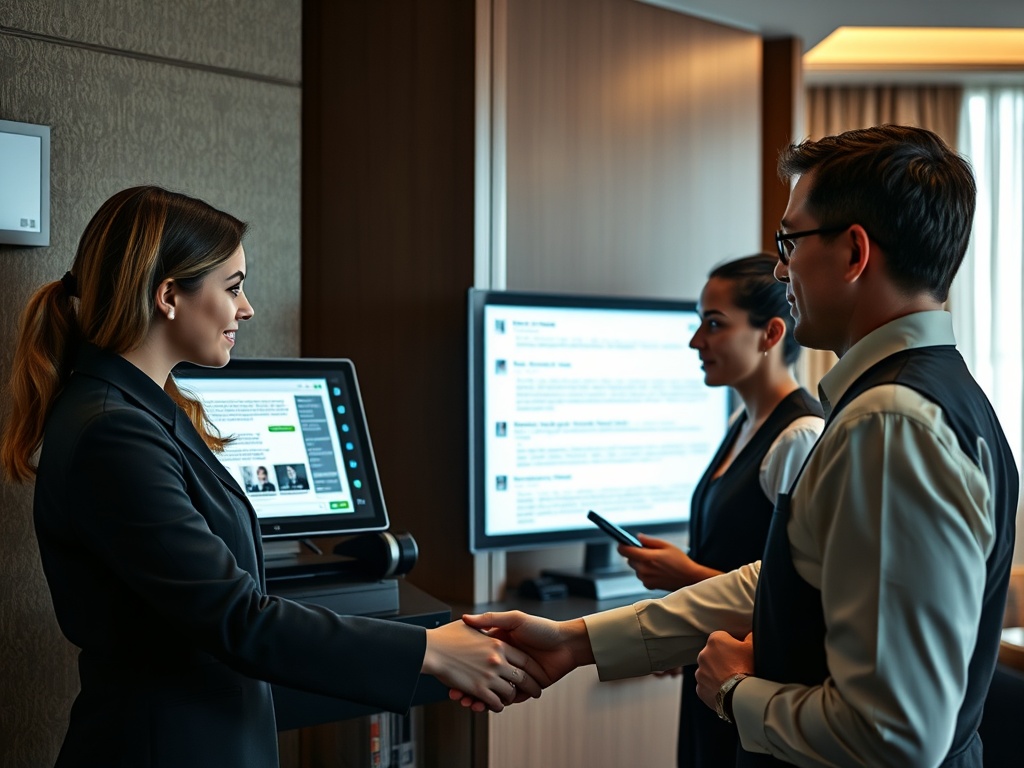
Guest messaging can be useful because it creates an asynchronous channel that fits around the traveler's schedule. It also gives operations teams a written task trail. The risk is slow response or automated answers that do not match the question. Hotels should set clear response expectations and route messages by urgency so a safety or access problem is not treated like a restaurant-hours query.
Language support is another opportunity. Translation tools can help staff and guests communicate, but important safety, billing or policy information should still be verified. Automation can assist the conversation without becoming the sole authority for a high-consequence decision.
Mobile keys and payments raise reliability expectations
A contactless journey depends on connectivity, device compatibility, battery life, payment authorization and system integration. Guests may blame the hotel rather than the technology vendor when any link fails. That makes redundancy essential. A property should be able to issue a physical key, take an alternative payment method and locate a reservation even when one system is unavailable.
The 2026 Hotel Technology Outlook highlights integration as a significant concern for hotel professionals. Vendor-supported research has limits, but the operational implication is credible: guest-facing convenience depends on back-end systems sharing accurate reservation, preference and room-status data.
Privacy is becoming part of the convenience trade-off
Contactless features can collect device, identity, location or behavioral data depending on how they are designed. Hotels should avoid assuming that a guest who wants speed also wants extensive tracking. Permission, data minimization and clear settings can help preserve trust. Basic service should remain available to guests who prefer not to install an app when feasible.
This is where changing traveler behavior matters. Travelers want more personalization and control at the same time. The most resilient contactless model lets the guest choose the channel without making them repeat information at every handoff.
A contactless-service maturity test
| Stage | Weak implementation | Stronger implementation |
|---|---|---|
| Pre-arrival | Generic app promotion | Useful choices tied to arrival needs |
| Check-in | Digital form plus desk queue | Remote completion with clear fallback |
| In-stay | Chatbot loops | Fast routing to the right team |
| Access | Mobile key only | Mobile key with reliable physical backup |
| Checkout | Digital folio with no help path | Self-service plus rapid dispute support |
Contactless adoption should be measured by completed journeys
Hotels often measure app downloads, digital check-ins or mobile-key activations because those metrics are easy to count. They do not show whether the guest completed the journey successfully. A stronger scorecard includes abandonment, fallback to the front desk, duplicate contacts, key reissues, message response time and service-recovery cases. If digital adoption rises while desk interventions rise at the same time, the technology may be moving work rather than removing friction.
Hotels can also segment adoption by traveler need instead of treating non-use as failure. Some guests prefer staff assistance, some have accessibility requirements, and some are unable or unwilling to use a particular device. Contactless service is mature when it improves choice without penalizing those guests.
Staff training has to evolve with the digital layer
A blended service model changes the skills required at the property. Employees need to understand what the guest has already done digitally, which systems can be trusted and how to recover when information conflicts. Training should cover mobile keys, messaging etiquette, privacy, payment exceptions and escalation rules alongside traditional hospitality skills. The aim is to prevent the common experience in which a guest completes several steps online and then has to repeat the same information to a staff member. Good contactless service makes the human interaction better informed, not disconnected from the digital journey.
Pre-arrival communication is a good place to set that choice. Guests can be offered digital check-in, app-based messaging or a traditional desk arrival without framing one path as the only modern option. Clear expectations about what each channel can do also reduce disappointment when a request still requires identification, a payment check or in-person assistance.
Contactless signals to watch through 2028
- More guest choice between app, web, kiosk, messaging and staff-assisted service rather than one mandated digital path.
- More integration between identity, loyalty, payments, room access and service requests, with greater scrutiny of privacy and cybersecurity.
- More AI handling of simple questions, paired with clearer escalation rules for complex or sensitive issues.
- More measurement of service recovery, not just digital adoption rates, because failed automation can be more frustrating than a traditional process.
The practical next step is to test the contactless journey as a guest would: arrive with low battery, weak connectivity, a room change and a billing question. If the experience still has a clear fallback at every stage, the technology is supporting hospitality rather than becoming another obstacle.