
Pull-out storage can make deep base cabinets easier to use without replacing the cabinet boxes, but the retrofit succeeds only when the opening, hinges, interior obstructions, slide clearances, and expected load are measured first. The most useful upgrade is the one that moves freely and remains serviceable after installation.
TL;DR: Measure the cabinet opening and interior depth in several places, note hinges and plumbing, choose a retrofit system designed for your cabinet type, verify load and clearance requirements, mount it square and level, then test it fully loaded before calling the project finished.
Decide What Problem the Pull-Out Must Solve
A narrow spice pull-out, deep pot drawer, tray divider, under-sink organizer, and roll-out shelf solve different problems. Start with the items you want to store and how often you use them. Heavy cookware needs stronger slides and a stable base; lightweight cleaning supplies may need a shaped organizer that works around plumbing.
Pull-outs are especially helpful when the back of a base cabinet is hard to reach. NKBA’s discussion of accessible pull-out storage highlights how drawers and pull-out shelves can bring contents into a more reachable position. Accessibility needs vary, so treat those ideas as planning principles rather than universal dimensions for every household.
If the cabinet is already overloaded with products that do not belong there, first use the sorting approach in organizing under the kitchen sink before investing in hardware.
Measure the Opening, Not Just the Cabinet Box
The face frame, hinges, door swing, center stile, plumbing, and existing shelf supports can reduce usable space. Measure the clear opening width at the front, then the interior width where the slides will sit. Measure depth from the mounting surface to the first obstruction and check the height needed for the tallest stored item.
Take measurements at more than one point because older cabinets are not always perfectly square. If the opening narrows or the sidewalls bow, a tight-fitting organizer may bind. Record the door-hinge projection and confirm that the pull-out will clear the door when extended.
Do not order by the nominal cabinet size alone. A “24-inch cabinet” can have a much smaller usable opening depending on construction.
Choose Between Bottom-Mount and Side-Mount Retrofits
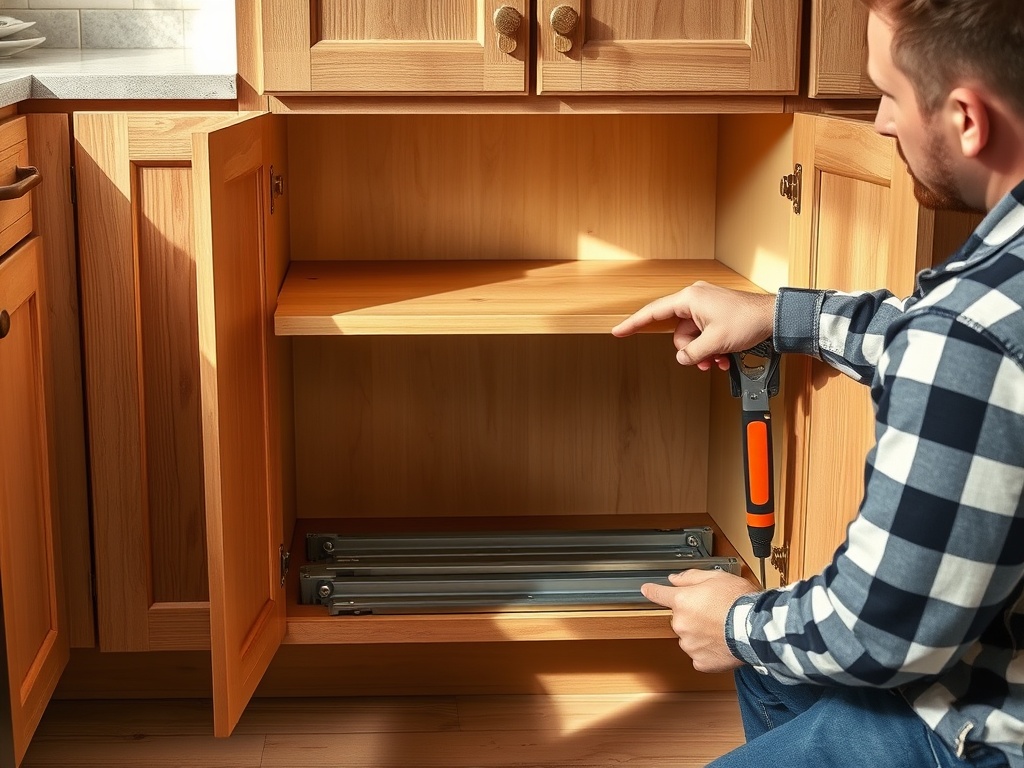
Many retrofit roll-out shelves attach to the cabinet floor or to side-mounted runners. Bottom-mounted systems can be convenient where sidewalls are irregular or hidden behind a face frame, while side-mounted slides may provide a familiar drawer-like action. The correct choice depends on the product, cabinet construction, and load.
Check whether the kit includes mounting brackets, spacers, or templates. Some face-frame cabinets need blocking to create a flush mounting plane. Frameless cabinets may offer a more direct attachment surface. Never assume that a slide can be fastened into a thin cabinet panel without verifying the manufacturer’s requirements.
Blum’s runner-system installation resources show why precise alignment and adjustment matter to smooth drawer movement. Even when you use another brand, the broader lesson is the same: slide hardware is a system, and small alignment errors can become large movement problems.
Plan Around Plumbing and Utilities
Under-sink pull-outs need extra care. Drain traps, disposal units, supply lines, shutoff valves, dishwasher hoses, and water filters all compete for space. A U-shaped or two-tier organizer may work better than a full rectangular shelf, but it must still leave service access.
Do not screw into a cabinet wall until you know what is behind it. Plumbing or electrical components can be close to the panel. If fastener length is uncertain, use the hardware specified by the organizer manufacturer or consult a qualified installer.
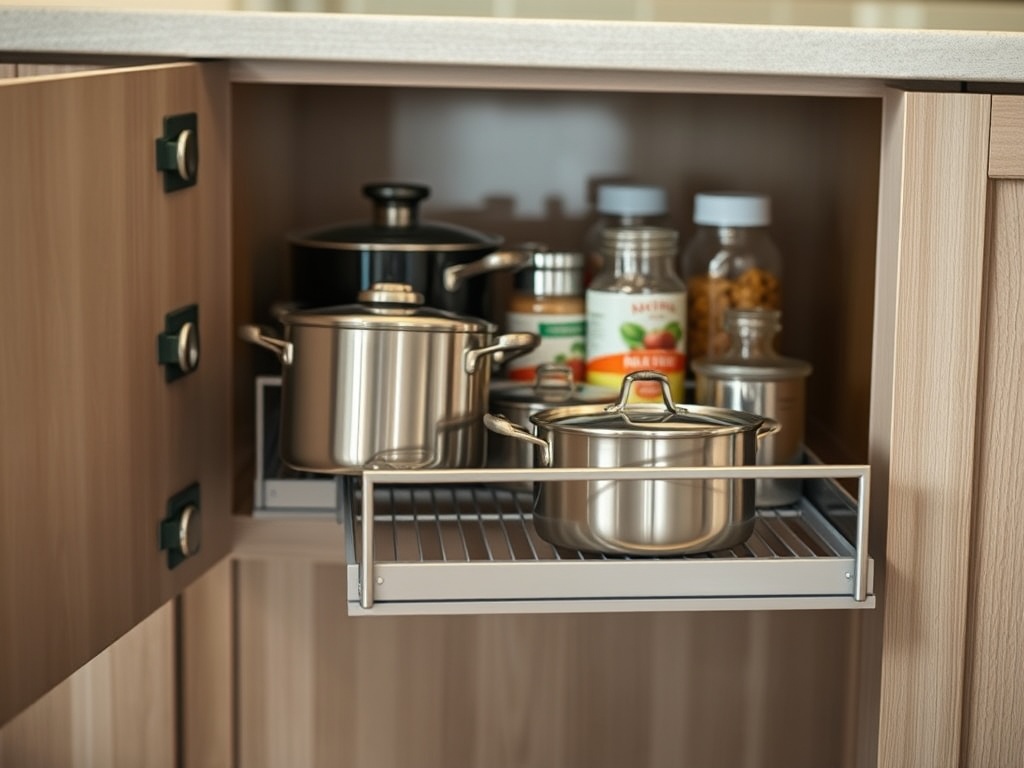
Install a Roll-Out Shelf Square and Level
Empty the cabinet and remove adjustable shelves that conflict with the new hardware. Repair loose shelf-pin holes, damaged cabinet floors, or moisture problems before adding a pull-out. The base must be solid enough to hold the hardware and stored load.
Dry-fit the organizer first. Mark the runner locations, confirm that the door opens far enough, and check clearance at full extension. Use a square or carefully measured reference lines so the two runners remain parallel. Fasten one side lightly, test alignment, then complete the installation according to the kit instructions.
After the shelf is attached, cycle it empty several times. It should extend and retract without rubbing, twisting, or lifting. If it binds, correct alignment before loading it rather than forcing the slide.
Respect the Published Load Rating
A pull-out’s capacity is limited by more than the basket or shelf itself. Slide rating, fasteners, cabinet material, mounting method, and extension length all contribute. Heavy items can also change how the cabinet feels when the shelf is fully extended.
Keep dense cookware and appliances low. Distribute weight rather than placing everything at the front edge. If a shelf feels unstable when extended, stop and reassess the installation. Do not use a pull-out as a step, seat, or temporary work platform unless it was specifically designed for that purpose.
In a tight kitchen, pull-outs should reduce visual and physical congestion rather than add another obstacle. The guide to common small-space decorating mistakes offers a useful reminder to protect circulation and avoid filling every available gap.
Use Door-Mounted Pull-Outs Only When the Door Is Ready
Some pull-outs attach to the cabinet door so the organizer moves when the door opens. They can create a clean, integrated feel, but the door and hinges must be able to handle the added forces. Older hinges, thin doors, or misaligned fronts may need adjustment or reinforcement.
Follow the kit instructions for door brackets and alignment. Test the door gap on both sides after installation and check that neighboring doors or drawers still open freely. If the door begins to sag, do not keep tightening random screws; identify whether the hinge, bracket, or organizer alignment is causing the problem.
Make the Retrofit Easy to Maintain
Pull-out storage needs occasional cleaning because crumbs, dust, and spills collect around runners and baskets. Choose a system that lets you remove the tray or wipe underneath it without disassembling half the cabinet. Avoid storing leaking containers directly over slide hardware.
Every few months, check mounting screws, alignment, and runner movement. Use only lubricants or cleaning methods approved by the hardware manufacturer; some slides are designed to operate without added grease. If soft-close or locking features stop working, consult the product instructions before adjusting them.
When a Cabinet Replacement Makes More Sense
A retrofit is not a cure for rotted cabinet floors, severe water damage, failing face frames, major layout problems, or cabinets that are already too small for the intended use. In those cases, spending money on premium pull-outs may only hide a structural or planning problem.
The best candidates are cabinets that are sound but inconvenient. A well-measured retrofit can improve reach, visibility, and daily organization while preserving countertops and cabinet boxes. That can be a meaningful upgrade without turning a storage problem into a full remodel.
Home and garden content is for informational and educational purposes only and does not replace cabinetmaking, plumbing, electrical, structural, accessibility, or legal advice. Follow hardware instructions and local requirements.
Measure one troublesome cabinet tonight and write down its clear opening, interior depth, hinge projection, and intended contents before comparing pull-out systems.