
When Should Teens Be Evaluated for Wisdom Teeth?
Most dentists recommend a first wisdom tooth assessment around age 15 to 17, before roots are fully formed and while intervention — if needed — tends to be simpler.
Key Takeaways
- The ideal evaluation window is roughly ages 15–18, when X-rays can show developing roots.
- Not all wisdom teeth need removal — the goal of evaluation is to determine trajectory, not to assume extraction.
- Early assessment gives families time to plan financially and logistically.
- Signs of crowding, impaction, or decay can appear before any pain is felt.
Why Timing Matters
Wisdom teeth (third molars) typically begin developing in the early teenage years and may erupt — or attempt to — anywhere from age 17 to 25. The roots are often only two-thirds formed at ages 15–17, which is significant: extraction during this window generally involves less surgical complexity, faster healing, and lower risk of nerve proximity complications compared to waiting until the roots are fully mature.
The American Association of Oral and Maxillofacial Surgeons recommends that third molar development be evaluated by a dentist or oral surgeon in adolescence — even in the absence of symptoms — because impacted wisdom teeth often cause no pain until they have already created problems.
What the Evaluation Involves
Panoramic X-Ray
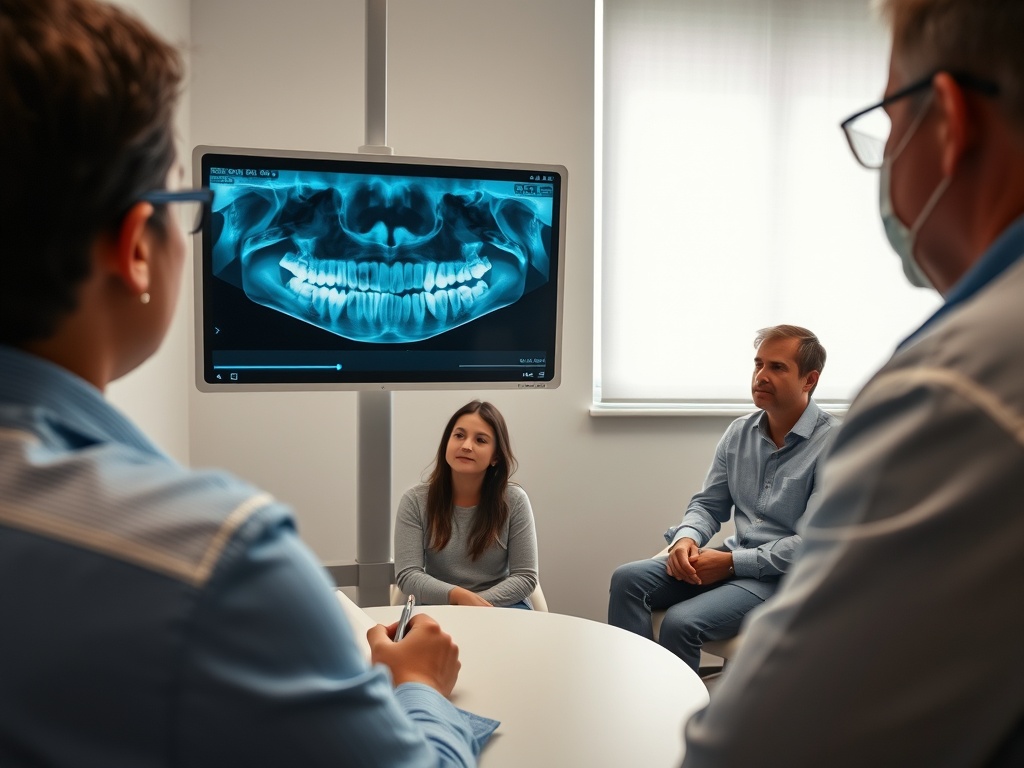
A panoramic or panorex X-ray is the primary tool for assessing wisdom teeth. It shows all four third molars, their angle of development, proximity to the inferior alveolar nerve, and the amount of space available in the jaw. This X-ray is often already part of orthodontic records, which means many teens already have this data without realizing it.
Clinical Exam
The dentist or oral surgeon evaluates how much space exists at the back of the mouth, whether adjacent molars show signs of crowding pressure, and if there are any visible gum changes over partially erupted wisdom teeth.
Teens already in orthodontic treatment will want to coordinate this evaluation with their orthodontist. Our comparison of braces vs clear aligners discusses how third molar status can sometimes factor into overall bite correction planning.
Clinical Checks for Teens Be Evaluated Wisdom Teeth
For Teens Be Evaluated Wisdom Teeth, this part of Clinical Checks for Teens Be Evaluated Wisdom Teeth focuses on confirmed findings, measurements, imaging, and health-history factors while comfort and function are assessed, with the same details verified while the options are being narrowed. The clinician should also explain what remains uncertain and whether another test or specialist opinion would alter the plan for Teens Be Evaluated Wisdom Teeth while recovery expectations are clarified, using the examination and health history rather than a general assumption.
Timing and Recovery for Teens Be Evaluated Wisdom Teeth
For Teens Be Evaluated Wisdom Teeth, this part of Timing and Recovery for Teens Be Evaluated Wisdom Teeth focuses on the order of diagnosis, preparation, treatment, healing, adjustment, and review before consent is finalized, with the same details verified while the options are being narrowed. The clinician should also explain how work, travel, eating, driving, exercise, or caregiving may be affected for Teens Be Evaluated Wisdom Teeth before treatment is scheduled, using the examination and health history rather than a general assumption.
Home Care for Teens Be Evaluated Wisdom Teeth
For Teens Be Evaluated Wisdom Teeth, this part of Home Care for Teens Be Evaluated Wisdom Teeth focuses on safe cleaning tools, foods, products, and daily techniques when the follow-up plan is written, with the same details verified while the options are being narrowed. The clinician should also explain which changes are expected and which should prompt an earlier call for Teens Be Evaluated Wisdom Teeth as the long-term result is reviewed, using the examination and health history rather than a general assumption. Recording that explanation gives the patient a clearer next step for Teens Be Evaluated Wisdom Teeth when the follow-up plan is written, especially when follow-up duties are reviewed while the options are being narrowed.
Cost Planning for Teens Be Evaluated Wisdom Teeth
For Teens Be Evaluated Wisdom Teeth, this part of Cost Planning for Teens Be Evaluated Wisdom Teeth focuses on an itemized estimate that separates diagnosis, temporary care, laboratory work, treatment, and follow-up while cost and timing are compared, with the same details verified while the options are being narrowed. The clinician should also explain insurance assumptions, payment timing, and later maintenance expenses for Teens Be Evaluated Wisdom Teeth while comfort and function are assessed, using the examination and health history rather than a general assumption.
Questions About Teens Be Evaluated Wisdom Teeth
When When Should Teens Be Evaluated for Wisdom Teeth is reviewed, ask the dentist to connect each recommendation to the examination findings and compare reasonable alternatives. Before leaving the discussion of When Should Teens Be Evaluated for Wisdom Teeth, confirm the first step, expected follow-up, and warning signs that justify earlier contact before consent is finalized. A consultation about When Should Teens Be Evaluated for Wisdom Teeth is more useful when you bring a brief timeline, current medicines, relevant health conditions, and details of earlier dental work.
Planning Notes for Teens Be Evaluated Wisdom Teeth
Many third molars erupt normally, cause no crowding, and remain healthy for years. A dentist may recommend periodic monitoring rather than extraction if wisdom teeth are fully erupted, easy to clean, properly aligned, and not causing adjacent tooth problems.
Red Flags That Move Up the Timeline
Certain findings at any age suggest earlier evaluation rather than a wait-and-see approach:
- Crowding of front teeth: Though not definitively caused by wisdom teeth, unexplained late crowding warrants investigation.
- Pericoronitis: Repeated inflammation and infection of the gum flap over a partially erupted wisdom tooth is a strong indicator for extraction.
- Cyst formation: Fluid-filled sacs around an impacted tooth are visible on X-ray and typically require prompt treatment.
- Decay on the second molar: If a partially erupted wisdom tooth creates a cleaning trap and the adjacent molar develops a cavity, it may be a sign that the wisdom tooth needs to be removed.
What Parents Can Do to Help
Here is a practical checklist for families approaching this stage:
- Ask your family dentist at your teen’s next checkup whether wisdom tooth evaluation is due — typically at age 15 or 16.
- Request a copy of any panoramic X-ray if one has already been taken (e.g., for orthodontic records).
- Note any complaints of jaw pain, soreness at the back of the mouth, or unusual pressure — even if intermittent.
- Ask specifically whether the evaluation recommends monitoring, extraction, or referral to an oral surgeon.
- If extraction is recommended, ask about optimal timing so the family can plan around school schedules.
It is also worth considering whether a virtual consultation might be available to review existing X-ray records before an in-person appointment. Our overview of virtual vs in-person dental consultations explains what these remote options can and cannot address.
Monitoring means continuing to check them at regular appointments. Our guide on what to expect at those visits breaks down the examination process in our article on dental checkup timing.
The goal of early evaluation is not to guarantee surgery — it is to understand trajectory early enough to act at the right time. If your teen has not yet had a wisdom tooth evaluation and is approaching 16, it is worth raising the question at their next appointment. You can also explore trauma-informed care approaches for teens with dental anxiety in our guide to trauma-informed dental care.
[TABLE]