
Braces vs Clear Aligners: Which Orthodontic Option Fits Your Case?
Both braces and clear aligners can correct most bite and alignment problems — but each has distinct clinical strengths, lifestyle trade-offs, and costs that make one or the other a better fit depending on the complexity of your case.
Key Takeaways
- Braces are fixed appliances; clear aligners are removable — which affects both treatment and discipline requirements.
- Severe bite problems, significant rotations, and vertical movements generally respond better to braces.
- Clear aligners suit mild to moderate cases and patients who prioritize aesthetics during treatment.
- Cost is often similar; treatment time varies more by case complexity than by appliance type.
How Each System Works
Traditional Braces
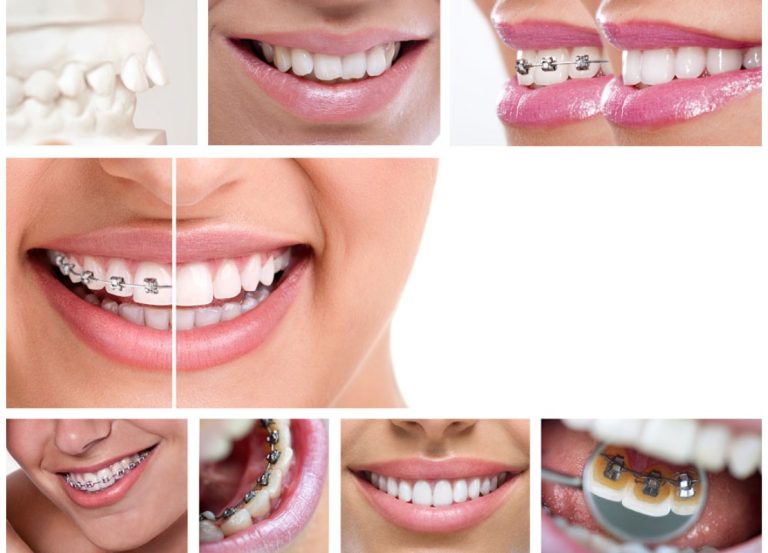
Metal or ceramic brackets are bonded directly to teeth, connected by archwires that the orthodontist periodically tightens. Constant gentle force is applied 24 hours a day. Ceramic brackets offer a less visible appearance, while lingual (inside-surface) braces are nearly invisible but involve a significant cost premium.
Clear Aligners
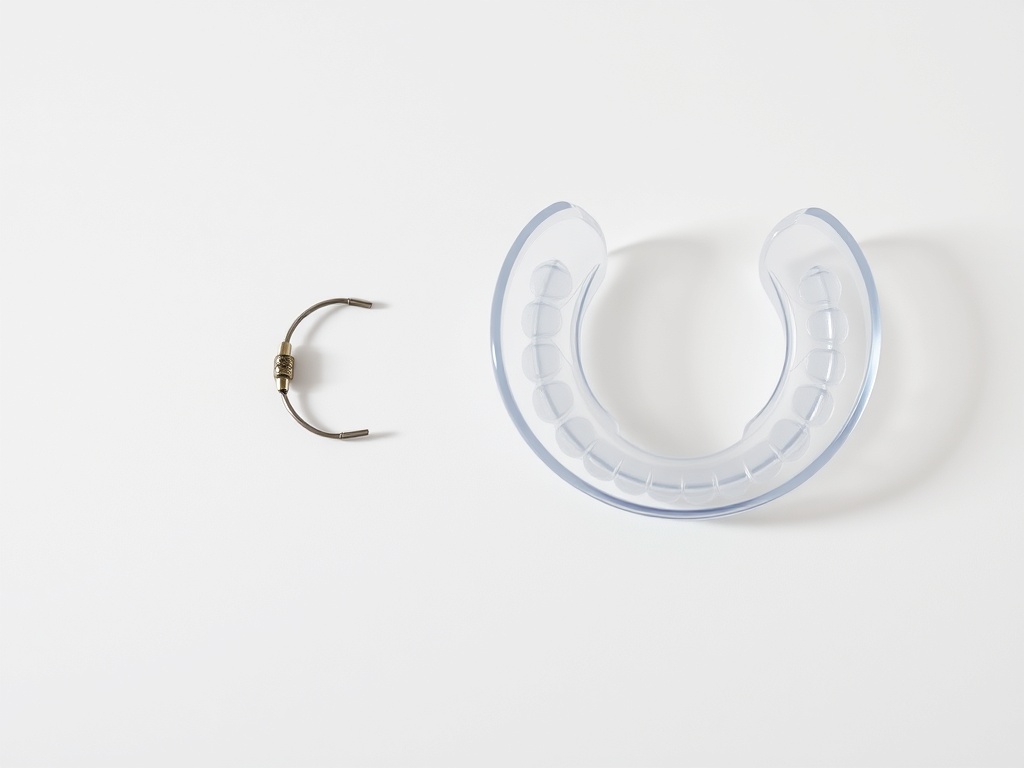
A series of custom-fabricated plastic trays — worn 20–22 hours per day — progressively move teeth through planned increments. Patients switch trays every one to two weeks. Removability allows for normal eating and easier oral hygiene but requires consistent wear to stay on track.
Comparing Options for Braces vs Clear Aligners
| Factor | Braces | Clear Aligners |
|---|---|---|
| Visibility | Visible (metal or ceramic) | Near-invisible when worn |
| Wear compliance | Fixed — no discipline required | Requires 20–22 hr/day wear |
| Eating restrictions | Yes — hard, sticky foods avoided | None — trays removed to eat |
| Oral hygiene | More challenging; extra tools needed | Easier — brush and floss normally |
| Complex movements | Strong advantage | Some limitations on severe cases |
| Average treatment time | 18–24 months (varies widely) | 12–18 months for mild/moderate cases |
| Typical cost range | $3,000–$8,000 depending on case | $3,000–$8,000 (similar range) |
| Adjustments | Every 4–8 weeks in-office | Remote monitoring available with some providers |
For supporting context on Braces vs Clear Aligners: Which Orthodontic Option Fits Your Case, review American Association of Orthodontists. Then compare the linked guidance with the examination findings for Braces vs Clear Aligners: Which Orthodontic Option Fits Your Case before the next appointment is booked, and ask which details do not apply to the current case.
Warning Signs for Braces vs Clear Aligners
For Braces vs Clear Aligners, this part of Warning Signs for Braces vs Clear Aligners focuses on stable symptoms versus swelling, fever, trauma, bleeding, drainage, or loss of function as the long-term result is reviewed, with the same details verified while the options are being narrowed. The clinician should also explain how quickly the condition is changing and whether delay could increase risk for Braces vs Clear Aligners before temporary care is replaced, using the examination and health history rather than a general assumption.
Questions About Braces vs Clear Aligners
For Braces vs Clear Aligners, this part of Questions About Braces vs Clear Aligners focuses on the symptom history, previous treatment, current medicines, and the result the patient values most before the next appointment is booked, with the same details verified while the options are being narrowed. The clinician should also explain which examination finding supports each recommendation and what information could change it for Braces vs Clear Aligners while the options are being narrowed, using the examination and health history rather than a general assumption.
Clinical Checks for Braces vs Clear Aligners
For Braces vs Clear Aligners, this part of Clinical Checks for Braces vs Clear Aligners focuses on confirmed findings, measurements, imaging, and health-history factors while risks and alternatives are compared, with the same details verified while the options are being narrowed. The clinician should also explain what remains uncertain and whether another test or specialist opinion would alter the plan for Braces vs Clear Aligners when the diagnosis is confirmed, using the examination and health history rather than a general assumption.
Comparing Options for Braces vs Clear Aligners During Planning
For Braces vs Clear Aligners, this part of Comparing Options for Braces vs Clear Aligners During Planning focuses on benefit, limitations, durability, maintenance, timing, and total cost when home-care instructions are prepared, with the same details verified while the options are being narrowed. The clinician should also explain how each choice preserves tooth structure or tissue and what backup treatment may be needed for Braces vs Clear Aligners when maintenance is discussed, using the examination and health history rather than a general assumption.
Comparing Options for Braces vs Clear Aligners Before Treatment
For Braces vs Clear Aligners, this part of Comparing Options for Braces vs Clear Aligners Before Treatment focuses on benefit, limitations, durability, maintenance, timing, and total cost as the treatment sequence is documented, with the same details verified while the options are being narrowed. The clinician should also explain how each choice preserves tooth structure or tissue and what backup treatment may be needed for Braces vs Clear Aligners before the next appointment is booked, using the examination and health history rather than a general assumption.
Clinical Checks for Braces vs Clear Aligners During Planning
For Braces vs Clear Aligners, this part of Clinical Checks for Braces vs Clear Aligners During Planning focuses on confirmed findings, measurements, imaging, and health-history factors while the expected outcome is clarified, with the same details verified while the options are being narrowed. The clinician should also explain what remains uncertain and whether another test or specialist opinion would alter the plan for Braces vs Clear Aligners before consent is finalized, using the examination and health history rather than a general assumption.
Questions About Braces vs Clear Aligners During Planning
The most useful preparation for an orthodontic consultation is to think through your priorities honestly. Use these questions as a framework:
Cases Where Braces Have a Clear Edge
- Skeletal bite problems: Significant overbite, underbite, or crossbite cases that require movement in three dimensions.
- Severe rotations: Teeth that need to rotate more than about 20 degrees are more reliably treated with fixed appliances.
- Vertical movements: Intruding or extruding teeth respond more predictably to braces.
- Younger teens: Patients who may not reliably wear aligners for 22 hours daily are often better candidates for fixed appliances.
Cases Where Clear Aligners May Have an Edge
- Mild to moderate spacing and crowding: The bulk of adult cases fall in this range, which aligners handle reliably.
- Relapse correction: Adults whose teeth have shifted after prior orthodontic work are often excellent candidates.
- Professional appearance concerns: Clear aligners are a genuine advantage for patients in client-facing roles.
- Gum disease management: Patients with periodontal concerns benefit from the easier cleaning access aligners provide.
If you are a parent evaluating options for a teenager, wisdom tooth status can sometimes affect orthodontic planning. Our guide on when teens should be evaluated for wisdom teeth explains how third molar development may intersect with orthodontic timing.
- How important is invisibility during treatment — and can you reliably commit to 22 hours of wear daily?
- Are there any known bite issues beyond simple crowding or spacing?
- What is your timeline expectation — and is flexibility possible?
- Is cost or payment flexibility a deciding factor?
For patients who want to begin exploring options before committing to an in-person appointment, our comparison of virtual vs in-person dental consultations explains what initial assessments can realistically cover remotely.
Similarly, if you have existing crowns or veneers and are considering orthodontic treatment alongside cosmetic improvements, our article on making old dental work match a whiter smile discusses how to sequence that work correctly.
A board-certified orthodontist is the right person to make the final call — the comparison above is a starting framework, not a substitute for clinical evaluation.
Home Care and Follow-Up for Braces vs Clear Aligners: Which Orthodontic Option Fits Your Case
Follow-up for Braces vs Clear Aligners: Which Orthodontic Option Fits Your Case should identify expected changes, symptoms that require a phone call, and the date of the next professional review. Long-term success with Braces vs Clear Aligners: Which Orthodontic Option Fits Your Case is easier to protect when daily cleaning and maintenance instructions are written clearly before consent is finalized.
[TABLE]