
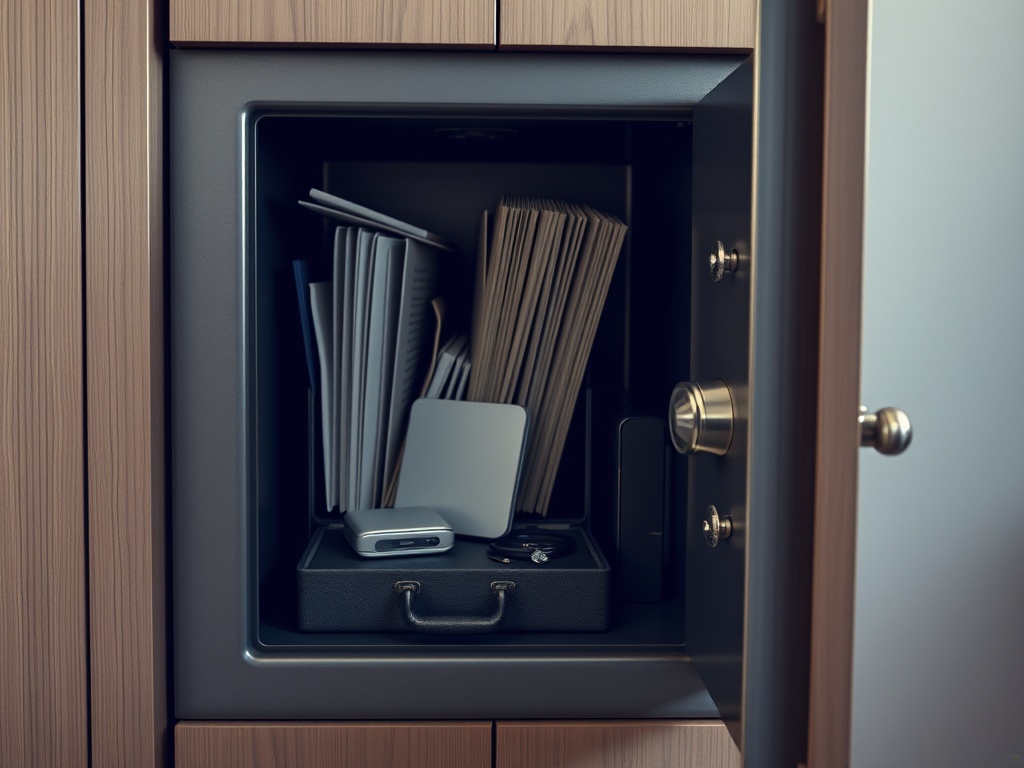
The best home safe depends on what you are protecting and from which hazard. Paper documents, jewelry, and digital backup media have different vulnerabilities, so a fire-resistant document safe, burglary-resistant safe, and moisture-protected media container should not be treated as interchangeable products.
TL;DR: Choose protection by risk: verified fire performance for papers, stronger theft resistance and anchoring for jewelry, and stricter heat and moisture protection for digital media. Check independent ratings, internal dimensions, weight, mounting options, lock access, and recovery plans before buying.
Compare Safe Types by the Job They Need to Do
| Safe type | Best for | What to verify | Common limitation |
|---|---|---|---|
| Fire document safe | Passports, deeds, certificates, paper records | Tested fire class and duration | May offer limited burglary resistance |
| Burglary-resistant safe | Jewelry and small valuables | Attack-resistance rating, lock type, anchoring | Fire protection may be separate |
| Water-resistant document box | Papers in leak or flood-prone areas | Water-resistance claim and closure design | Not necessarily fire or theft resistant |
| Media-oriented safe | Backup drives and sensitive media | Lower allowable internal temperature and humidity | Often costs more for the same interior volume |
| Portable lockbox | Grab-and-go records | Lock quality and portability | Portability also makes theft easier |
This is a use-case comparison rather than a brand ranking. Safe models and certifications change, so verify the exact label on the product you are considering.
Start With the Hazard, Not the Size
It is easy to shop by cubic feet and forget why the safe is needed. Make a list of contents and rank the threats: house fire, burglary, water, accidental access, or simple organization. A safe optimized for one risk may be weak against another.
For irreplaceable documents, fema recommends keeping important records in a fireproof and waterproof box or safe and maintaining secure electronic copies. That layered approach matters because no home container protects against every disaster scenario.
Do not store the only copy of a critical document or backup in one physical location. A secure off-site or cloud copy can reduce the consequences of a total loss.
Understand Fire Ratings Before Trusting Marketing Language
“Fireproof” is often used casually, but meaningful protection should be tied to a recognized test or specific performance claim. Ul Solutions describes how safe fire testing evaluates internal temperature and humidity during fire exposure and assigns classes for different contents.
Paper can tolerate higher internal temperatures than many digital media formats. A safe suitable for paper records may therefore be inappropriate for a hard drive, flash drive, film, or other heat-sensitive media. Check the certification label and manufacturer’s documentation for the exact contents and duration covered.
Also remember that a fire rating does not automatically mean strong burglary resistance or water resistance.
Jewelry Needs Theft Resistance and Anchoring
Small jewelry collections can fit in a compact safe, but a light safe may simply be carried away. Consider total weight, construction, lock design, anchoring provisions, and where the safe can be installed. If the manufacturer provides a tested burglary rating, understand what that rating represents rather than relying on door thickness alone.
Anchoring can improve resistance to removal, but only when the floor or wall structure and fasteners are suitable. Do not drill into concrete slabs, walls, or floors without considering utilities, post-tension cables, waterproofing, and property restrictions. Professional installation is appropriate when the structure is uncertain.
The same load-awareness principle appears in securely hanging shelves and mirrors: a strong product is only as reliable as the surface and fasteners supporting it.
Backup Drives Need a Different Protection Strategy
Digital backups are compact, but they are vulnerable to heat, humidity, impact, and obsolescence. If a drive contains the only copy of family photos or business records, the bigger problem is the lack of redundancy, not the safe.
Use a multi-copy backup strategy: one working copy, another local backup, and an off-site or secure cloud copy where appropriate. Encrypt sensitive data and protect recovery credentials separately. For a physical drive stored in a safe, verify that the safe’s tested internal conditions are suitable for electronic media, not just paper.
Do not assume a sealed plastic bag inside a paper-rated safe creates a media-rated environment. Moisture control and heat transfer are separate issues.
Lock Type Is a Convenience and Reliability Choice
Mechanical combination locks avoid batteries but can be slower to open. Electronic keypads are convenient but require battery maintenance and should have a clear procedure for low-power conditions. Biometric locks can be fast, but performance varies and they may still rely on electronic backup systems.
Choose a lock you will actually maintain and can operate under stress. Understand override-key policies and where those keys will be stored. Hiding the override key beside the safe defeats much of the access control.
If multiple household members need access, decide who should know the code and how changes will be handled. Avoid writing combinations on obvious nearby notes or unsecured digital files.
Size the Interior for Real Objects
Manufacturer exterior dimensions can be misleading because insulation, door construction, shelves, and bolt work reduce interior space. Measure the largest document binder, jewelry case, drive container, or envelope you plan to store and compare it with usable internal dimensions.
Leave room for future records but avoid buying a large safe solely because it looks substantial. A bigger unit is heavier, harder to place, and may create floor-loading or moving issues. If you rent, consider what can be installed without violating the lease and how the safe would be moved later.
Placement Changes the Risk Profile
A safe should be accessible enough to use but not obvious to every visitor. Avoid locations exposed to routine water leaks, extreme humidity, or direct heat sources. Basements can provide concealment and floor support in some homes but may face flood or moisture risk; upper floors may create weight and fire-collapse considerations.
There is no universal best room. Evaluate local hazards, building structure, evacuation needs, and access. If important documents must be grabbed during an emergency, a small protected go-file may complement a heavier permanent safe.
Maintain the Safe Like Other Home Equipment
Test the lock periodically, replace electronic-lock batteries as directed, inspect seals, and confirm that anchoring has not loosened. Keep the interior dry and follow the manufacturer’s guidance for any desiccant or humidity-control product. Avoid storing wet papers or damp jewelry cases inside.
Review contents annually. Remove expired documents, update insurance inventories, rotate digital backups, and verify that off-site copies are still accessible. The safe should support a larger preparedness plan rather than becoming a forgotten box.
For connected layers of security, smart security cameras for indoor and outdoor use covers network, privacy, storage, and mounting decisions that physical safes do not address.
Choose Verified Protection Over Impressive Appearance
Thick-looking doors, shiny bolts, and dramatic product photos are not substitutes for relevant testing. Match the safe to the contents, read the certification label, verify mounting requirements, and maintain redundant copies of critical information.
A good purchase may be two smaller solutions rather than one large safe: a rated document container for papers and a theft-resistant anchored safe for jewelry, with encrypted digital backups stored separately. The right answer is the one that addresses the actual hazards rather than the most marketable feature list.
Home and garden information is for educational purposes only and does not replace security, structural, fire-safety, insurance, cybersecurity, or legal advice. Verify certifications and installation requirements for the specific safe you purchase.
List the five most important items you plan to protect and write the primary hazard beside each one before comparing safe models.